
The Land Registration Act 2002 is the legal foundation for property registration in England and Wales. While you don't need to know every detail, understanding its key provisions helps you understand why lease plans must meet certain standards and how property registration works. As chartered surveyors working within this framework daily, we explain what matters for property owners.
What Is the Land Registration Act 2002?
The Land Registration Act 2002 came into force in October 2003, replacing the Land Registration Act 1925. It modernized land registration for the digital age and aimed to make property ownership more transparent, secure, and easy to prove. The Act governs how property interests are registered with HM Land Registry and sets out requirements for registration documents including lease plans.
Before 2003, many aspects of land registration relied on older principles that predated modern technology. The 2002 Act updated the system for electronic conveyancing, clarified ownership and boundary rules, strengthened protections against fraud, and set clearer standards for registration documents.
Key Principles of the Act
The Mirror Principle
The Land Register should accurately "mirror" property ownership and interests. When you look at a property's Land Registry title, you should see a complete picture of who owns it, what interests exist over it (like leases or mortgages), and what restrictions apply. This principle requires complete and accurate documentation of all property interests.
The Curtain Principle
The Register acts as a "curtain" behind which older historical interests are hidden. Once property is registered, you don't need to investigate historical title documents going back decades or centuries. The current Register provides all the information buyers need. This simplifies conveyancing and makes property transactions faster and cheaper.
The Insurance Principle
The State guarantees registered titles. If someone suffers loss because of Land Registry errors or fraud, they can claim compensation from the Land Registry. This insurance principle gives property owners confidence in the registration system. Your registered title is state-guaranteed proof of ownership.
How the Act Affects Lease Plans
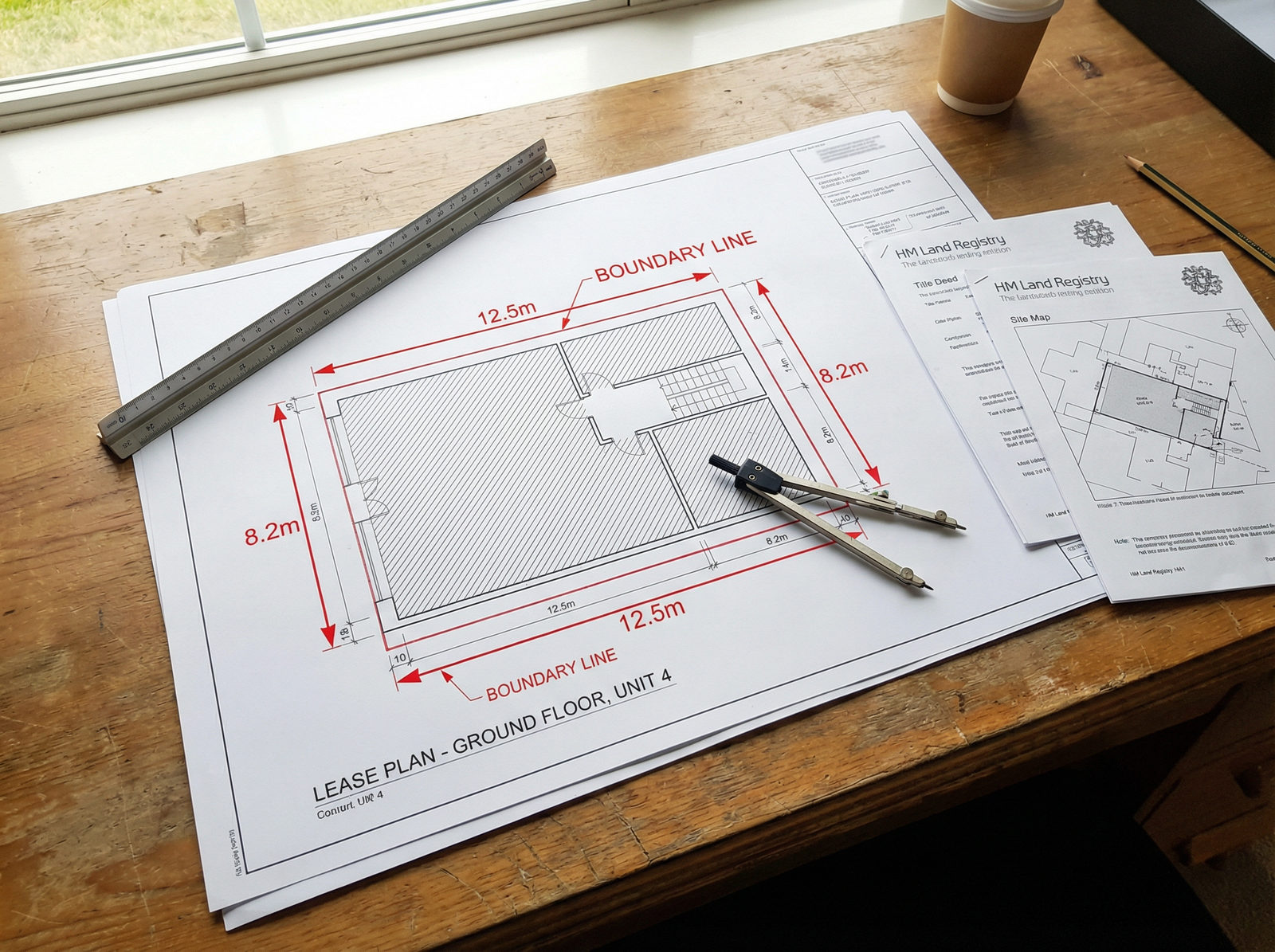
The Land Registration Act 2002 sets out requirements for leases to be registrable. Leases over seven years must be registered (previously it was 21 years). Short leases under seven years don't require registration but can be registered voluntarily. To register a lease, you must submit a compliant lease plan meeting Land Registry standards.
The Act gives the Land Registry power to set detailed requirements for plans through Land Registration Rules. These rules specify scale requirements, boundary representation, north points, and other technical details. This is why professional lease plans from chartered surveyors are necessary – amateur plans rarely meet these detailed requirements.
Registration Requirements Under the Act
Compulsory Registration Triggers
The Act makes registration compulsory when certain property transactions occur including transfer of freehold property, grant of leases over seven years, assignment of leases with over seven years remaining, and first legal mortgages of unregistered properties. Failing to register within the required timeframe (usually two months) can void the transaction.
Voluntary Registration
Even without a compulsory trigger, property owners can voluntarily register their property. Benefits include state-guaranteed title, easier future sales, and protection against squatters (adverse possession is much harder against registered land). Many older properties that haven't sold since before compulsory registration became widespread remain unregistered, but owners can register them any time.
First Registration
When previously unregistered property is registered for the first time, detailed information must be provided including proof of ownership, accurate property descriptions, plans showing property extent, and details of any rights or restrictions affecting the property. This is why first registrations often require more extensive surveying work than subsequent transactions.
Boundary Provisions
The General Boundary Rule
The Act continues the "general boundary rule" from previous legislation. Title plan boundaries show the general position of boundaries rather than fixing them with exact precision. This reflects the practical reality that many boundaries have developed over time and exact positions might be disputed or unclear.
General boundaries are shown within a few centimeters of their true position. For most property owners, this works fine. However, when precision matters (like creating lease plans for buildings divided into flats), professional measured surveys provide the accuracy needed.
Determined Boundaries
The Act allows property owners to apply for "determined boundaries" – precisely fixed boundary positions. This requires detailed survey evidence and serving notice on neighboring property owners. Determined boundaries are recorded with greater precision and provide certainty about exact boundary positions. However, the application process is complex and expensive, so determined boundaries are relatively rare.
Electronic Conveyancing Provisions
The 2002 Act prepared the ground for electronic conveyancing – dealing with property transactions digitally rather than with paper documents. While full electronic conveyancing hasn't yet been implemented, the Act gave Land Registry powers to develop electronic systems. We now have electronic document lodgment, digital title registers, and online property searches – all steps toward the Act's vision of paperless property transactions.
For chartered surveyors, this means we can submit plans electronically, receive registrations digitally, and access Land Registry information online. This speeds up the registration process and reduces errors from paper handling.
Adverse Possession Changes
The Act made significant changes to adverse possession (sometimes called "squatters' rights"). Under old law, someone continuously occupying land without permission for 12 years could claim ownership. The 2002 Act made this much harder for registered land.
Now, adverse possessors must serve notice on the registered owner after 10 years. The owner can object, preventing the claim unless the squatter can prove special circumstances. This change strengthened registered owners' rights and made adverse possession claims against registered land very difficult. It's another reason why property registration provides valuable protection.
Overriding Interests
The Act reduced "overriding interests" – property rights that bind purchasers even though they're not registered. Previously, many unregistered rights could affect property unexpectedly. The 2002 Act narrowed these substantially. Rights must generally be registered to be enforceable. This makes property ownership more transparent and secure.
However, some overriding interests remain including rights of people in actual occupation, legal easements (rights of way) obvious on inspection, and certain public rights. When purchasing property, you still need proper surveys and legal checks to identify these potential issues.
Priorities and Protected Interests
The Act clarifies rules about priority – which interests take precedence when multiple interests exist over the same property. Generally, registered interests have priority according to their registration date. Unregistered interests can lose priority to later registered interests in some circumstances.
This makes timely registration crucial. If you're granted a lease or acquire other property interests, register them promptly. Delay might allow someone else to register conflicting interests first, potentially affecting your rights.
Alteration and Indemnity
The Act sets out when the Land Register can be altered to correct mistakes and provides for compensation (indemnity) when people suffer loss due to alterations or errors. The Land Registry can rectify the Register to correct mistakes, remove entries obtained through fraud, or bring the Register in line with actual facts.
If Register alteration causes you loss, you may claim indemnity. This insurance aspect of registration protects innocent parties who suffer from Register errors or rectification. It's another reason why the Land Registration system is trustworthy and why registered titles carry real value.
Practical Implications for Property Owners
For Buyers
The Act means you can trust Land Registry titles. Once property is registered in your name, you have state-guaranteed ownership. Make sure your solicitor registers your purchase properly and promptly. Keep your title documents safe – though they're also held digitally by the Land Registry.
For Sellers
Having registered property makes selling easier. Buyers can verify ownership quickly through Land Registry searches. If your property is unregistered, consider voluntary registration before selling – it can speed up the sale process.
For Leasehold Property Owners
The Act requires leases over seven years to be registered. This means if you buy a flat with a lease over seven years remaining, it must be registered with a proper lease plan. Work with professional surveyors to ensure your lease plan meets registration requirements.
For Landlords
When granting leases, ensure you provide tenants with compliant lease plans. If lease plans don't meet Land Registry standards, registration will fail, potentially voiding the lease. Professional surveying from the start prevents these problems.
Recent Developments
Since 2003, Land Registration Rules have been updated several times to reflect changing technology and improve the registration process. Digital submissions have become standard. Requirements for plans have been clarified and refined based on practical experience.
The Land Registry continues developing its electronic services. More transactions can now be completed entirely online. For property professionals including chartered surveyors, these developments make our work more efficient while maintaining the high standards the Act requires.
Conclusion
The Land Registration Act 2002 provides the legal framework for property registration in England and Wales. While its detailed provisions can be complex, the key principles are simple: the Register should accurately reflect property ownership, registered titles are state-guaranteed, and proper documentation (including compliant lease plans) is essential for registration.
For property owners, the Act provides security and transparency. Your registered title is valuable proof of ownership. When transactions require lease plans or other registered documents, working with professional chartered surveyors ensures compliance with the Act's requirements and smooth registration.
If you need lease plans or other surveying services that comply with Land Registration Act requirements, get in touch with our experienced team. We understand the Act's requirements and deliver plans that meet Land Registry standards first time.
Need Compliant Lease Plans?
Our chartered surveyors ensure your plans meet all Land Registration Act 2002 requirements. Professional service, Land Registry compliance, and peace of mind.
Get Your Quotation